Access Control for Multi-Site Businesses: Managing Multiple Entry Points Across Locations
Running a business across more than one location means keeping track of who can go where, across multiple buildings, different staff rosters, shifting contractor arrangements and a constantly changing tenant mix. A traditional key system becomes unmanageable quickly in that environment, and the security gaps it leaves behind are not theoretical. When a key is lost, copied or not returned, there is no reliable way to know who still has access to which doors without replacing locks across the board. For security systems Coffs Harbour businesses depend on to manage that complexity, the answer is a professionally scoped access control system built around the specific demands of a multi-site operation. This post covers what that looks like in practice, from centralised management and role-based permissions to real-time monitoring and scaling the system as the business grows.
The Operational Challenge of Managing Multiple Entry Points
A single-site business with one front door and a handful of staff is a straightforward access control problem. A multi-site operation with offices, warehouses, loading docks, shared amenities and rotating contractors is a fundamentally different challenge. Every additional door and every additional user multiplies the administrative load and the potential for a security gap to open up unnoticed.
The operational challenges that emerge at scale include:
- Tracking which staff, contractors or tenants have access to which doors across different locations
- Revoking access immediately when someone leaves, changes roles or a contractor arrangement ends
- Responding to a lost or stolen credential without compromising security at every door it could have been used at
- Maintaining visibility over who is entering and exiting each site, and when, without being physically present
Centralised Access Management Across Locations
The defining feature of a well-designed multi-site access control system is the ability to manage every door from a single platform. Rather than visiting each location to update permissions or pull records, facility managers and business owners can control the entire system remotely through a web-based dashboard or a dedicated management platform. That centralisation is not just a convenience, it is what makes consistent security policy enforceable across multiple locations.
What centralised access management makes possible:
- Adding or removing user credentials across all sites simultaneously from a single interface
- Setting and adjusting access schedules so specific users can only enter certain areas during defined hours
- Locking down a single door, a building or every site in the system in response to a security event
- Generating access reports for any location, time period or individual user without on-site attendance
Role-Based Permissions and Access Schedules
Not every person who needs to enter a building needs access to every part of it, and not every contractor or tenant should be able to come and go at any hour. Role-based permissions allow a multi-site security system to be configured so that access rights reflect each person's actual role, not a blanket policy applied to everyone to avoid the administrative overhead of managing it properly.
Practical applications of role-based access in a commercial setting:
- Office staff are granted access to the main entry, their floor and amenities, but not server rooms or financial archives
- Contractors are issued time-limited credentials that expire automatically at the end of a project without requiring manual deactivation
- Strata tenants have access to common areas and their own tenancy, with the strata manager controlling those permissions centrally
- After-hours access is restricted to specific roles, with automated alerts triggered if access is attempted outside a user's scheduled window
Remote Lock and Unlock: Managing Entry Points Without Being On-Site
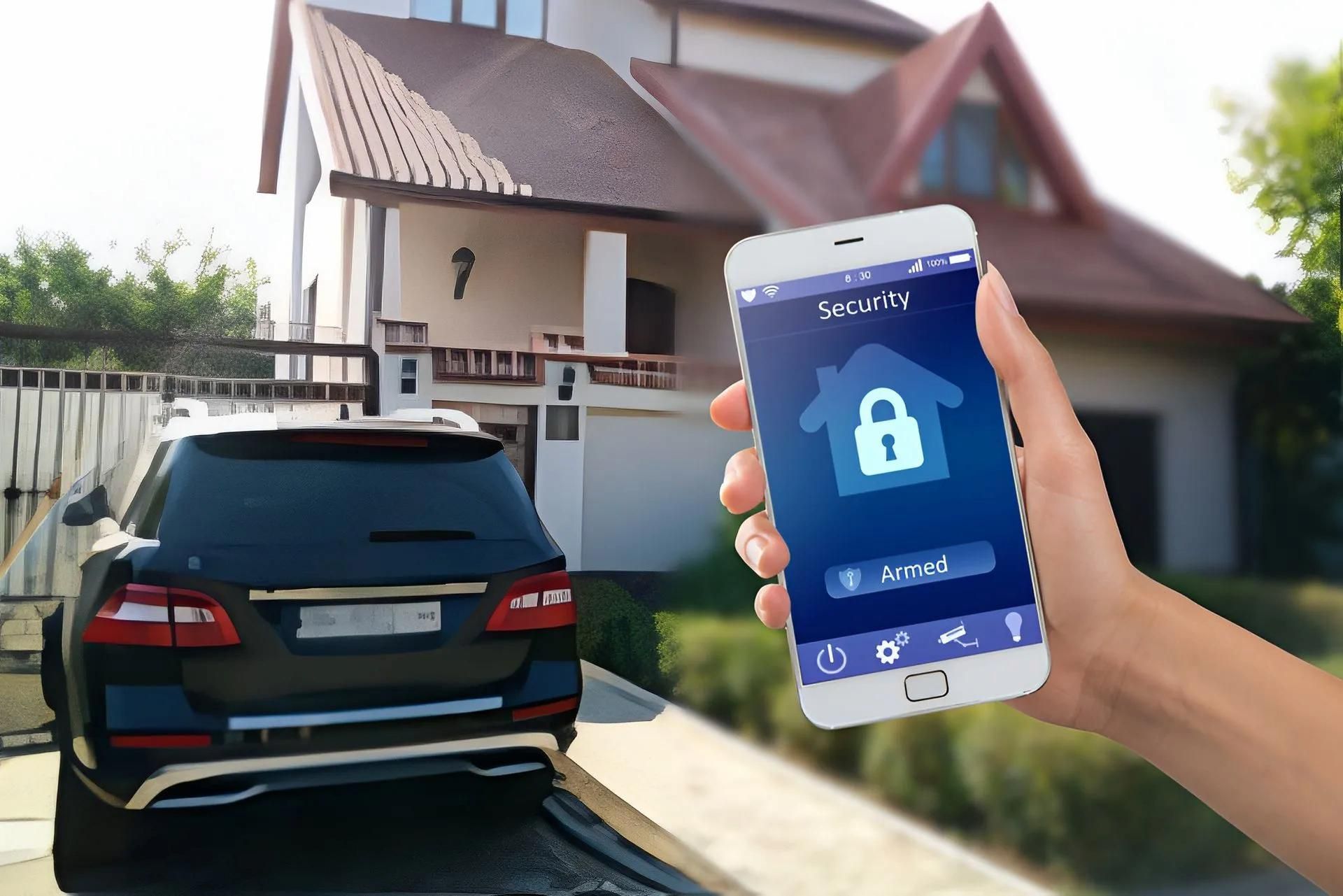
One of the most practical advantages of a modern access control system for multi-site operators is the ability to lock, unlock or grant temporary access to any door remotely. A staff member arrives early at a location where no-one else is on site yet. A delivery needs to be received at a warehouse while the manager is at another location. A tenant is locked out of their space on a Sunday. Each of these situations can be resolved without a physical callout when the system supports remote management.
Remote access capabilities worth planning for in a multi-site installation:
- Unlocking a specific door temporarily from a phone or computer for a verified visitor or delivery
- Issuing a one-time or time-limited digital credential to a contractor without issuing a permanent card or fob
- Triggering a site-wide lockdown remotely in response to a security incident or after-hours alarm
- Receiving real-time alerts when access is attempted at a door outside normal hours or by an unrecognised credential
Audit Trails and Reporting Across Sites
In a multi-site environment, the ability to produce a reliable record of who accessed which door and when is not just useful for security. It has practical implications for compliance, workplace investigations, insurance claims and tenancy disputes. A well-configured security system in Coffs Harbour records every access event and makes that data retrievable in a format that is actually useful.
The audit and reporting functions that matter most for commercial operators:
- A time-stamped log of every access event at every door across all locations, stored in the system and retrievable on demand
- The ability to filter records by user, door, location or time period for targeted investigations
- Automated reports that can be scheduled and sent to property managers, strata committees or business owners on a regular basis
- Integration with alarm and CCTV systems so access events can be cross-referenced with video footage when needed
Integration with Alarms and CCTV
Access control does not operate in isolation in a well-designed commercial security setup. Integrating the access system with existing alarm infrastructure and CCTV creates a layered approach where each system reinforces the others. An access event at an after-hours door can automatically trigger a camera to record and alert a monitoring service. A forced-entry attempt at one site can trigger alerts across the entire network simultaneously.
Integration points that a professional locksmith will scope during installation:
- Linking door controllers with the alarm panel so a forced-entry event triggers the alarm response automatically
- Connecting access events with CCTV footage so every entry can be matched to a video record
- Setting up automated alerts to a nominated contact or monitoring centre when defined access events occur
- Ensuring the access control system communicates with the broader
- security systems infrastructure rather than operating as a separate, siloed layer
Handling Lost Credentials and Instant Lockdowns
In a key-based system, a lost key at a multi-site operation means working out which locks that key fits, arranging rekeying across those locations and hoping no-one used the window between the key going missing and the locks being changed. In a well-configured access control system, a lost card or fob is deactivated in seconds from the management platform, and that deactivation applies immediately across every door in the system. The credential becomes worthless before it can be used.
What instant credential management looks like in practice:
- A lost access card is reported and deactivated from the platform within minutes, with no physical change to any lock required
- A staff member who leaves the business on short notice has their access revoked across all sites before they reach the car park
- A full site lockdown can be triggered remotely in response to a security threat, locking every door in the system simultaneously
- New credentials can be issued immediately to replace lost ones, with the same role-based permissions applied automatically
Scoping and Scaling a Multi-Site System
Getting a multi-site access control system right from the start requires a proper scoping process that accounts for the number of doors, the types of entry points, the different user groups and how the business is likely to grow. A system that is correctly sized for the current operation but has no capacity to scale will require costly replacement rather than extension as the business adds locations or users. A professional locksmith with commercial installation experience works through those requirements before any hardware is ordered.
What a proper scoping process covers:
- A site audit of every entry point, including doors, gates, lifts, loading bays and internal restricted areas
- Assessment of the existing infrastructure, including cabling, power supply and whether current alarm or CCTV systems can be integrated
- User group mapping to define the permission levels, access schedules and credential types required
- A system architecture that supports the current number of doors and users but can be expanded without replacing the core hardware
Speak to Our Team About Your Multi-Site Security Setup
We at
Coffs City Lock Mart work with business owners, facility managers and strata managers across the region to scope, install and maintain access control systems built for commercial and multi-site operations. Whether you are managing a single building with multiple tenancies or a portfolio of properties across different locations, the right security system in Coffs Harbour starts with a proper assessment of what the operation actually needs.
Call our team or visit us in store to arrange a site assessment and find out what a professionally installed system looks like for your specific situation.